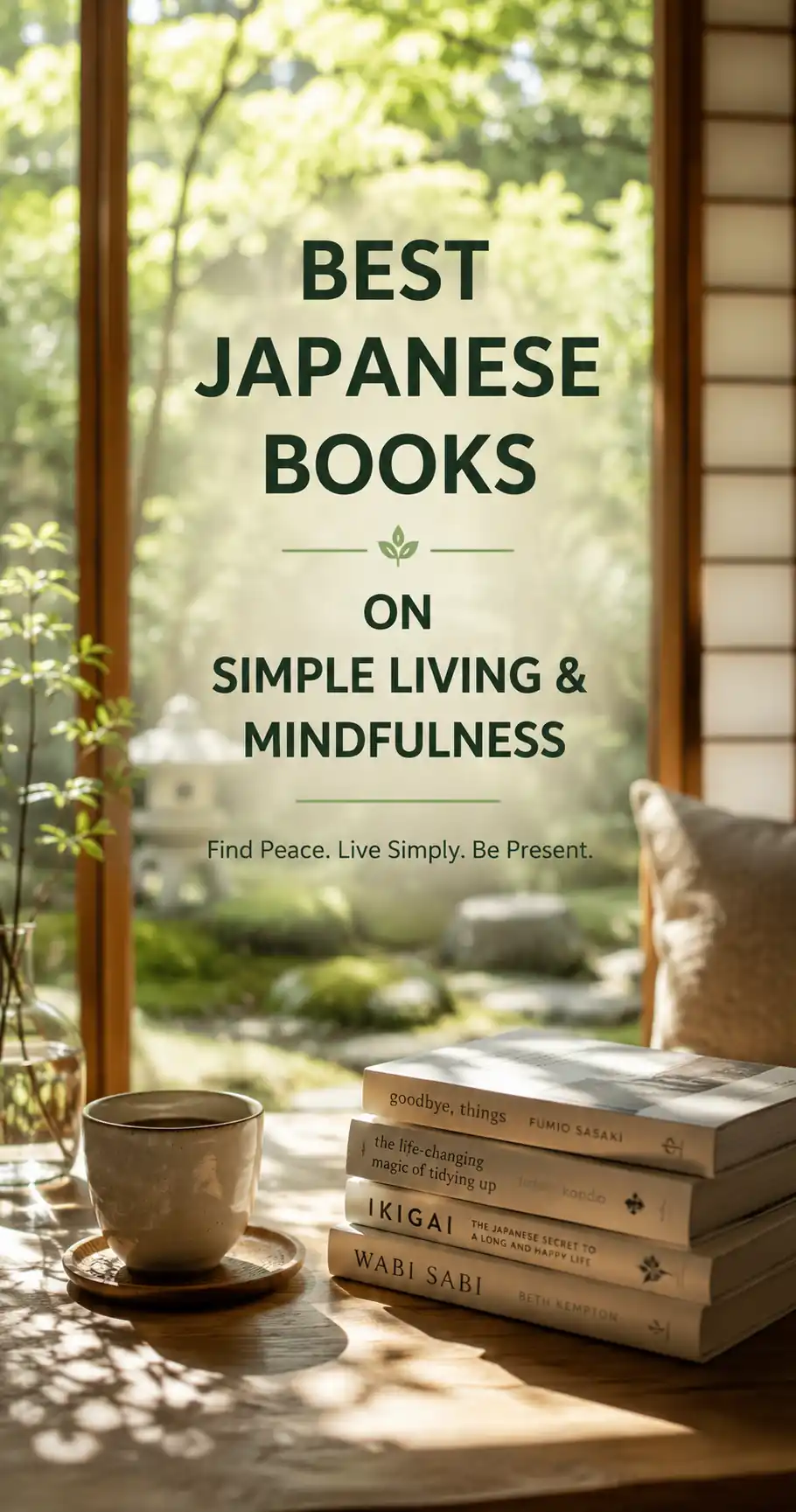
The Best Japanese Books About Simple Living and Mindfulness
Introduction
Modern life has become increasingly noisy. Our phones never stop buzzing, our schedules keep filling up, and even our moments of rest are often interrupted by endless notifications. It’s no surprise that more people are searching for books that encourage slowing down, simplifying life, and finding genuine peace.
Japan has quietly become one of the world’s greatest sources of wisdom on intentional living. Long before concepts like digital detox, minimalism, or mindfulness became popular in the West, Japanese writers were exploring ideas of balance, gratitude, nature, and accepting life’s imperfections. These aren’t simply self-help techniques—they’re philosophies deeply rooted in everyday life.
Over the past few years, I found myself naturally drawn toward Japanese books whenever life became overwhelming. Unlike many motivational books that promise dramatic overnight transformation, Japanese authors often offer something gentler. They invite readers to pause, observe, and appreciate ordinary moments instead of constantly chasing extraordinary ones.
Some of these books completely changed how I think about productivity, happiness, and even my home. Rather than trying to own more or accomplish more, I slowly began asking a different question: What truly matters?
If you’re looking for thoughtful books that help you build a calmer, more meaningful life, this guide introduces some of the finest Japanese books on simple living and mindfulness—both timeless classics and modern favorites.
Key Takeaways
- Japanese books focus on lasting habits rather than quick self-improvement.
- Many combine ancient philosophy with practical everyday advice.
- Simple living is about creating space for what truly matters, not owning less for its own sake.
- Mindfulness appears throughout Japanese literature in subtle, realistic ways.
- Several Japanese classics remain just as relevant today as when they were first published.
Why Japanese Books Offer a Different Perspective on Simple Living
Many Western self-help books are built around measurable goals: become richer, healthier, more productive, or more successful. Japanese literature often approaches life from a different direction. Rather than asking how to improve yourself, it asks how to become more present with the life you already have.
This difference may seem subtle, but it creates an entirely different reading experience. Instead of feeling pressured to constantly optimize every minute, readers are encouraged to notice beauty in ordinary routines.
Finding Beauty in Imperfection
One of Japan’s most influential ideas is wabi-sabi, the appreciation of imperfect, incomplete, and temporary things.
A cracked ceramic bowl repaired with gold, fading autumn leaves, or an old wooden table carrying decades of memories—all represent beauty precisely because they show the passage of time.
This philosophy naturally encourages people to slow down instead of endlessly replacing everything with something newer.
Living With Less Doesn’t Mean Living With Nothing
When people hear “Japanese minimalism,” they often imagine empty white rooms with almost no furniture.
While some modern minimalists certainly live that way, traditional Japanese simplicity is far more practical. The goal isn’t owning the fewest possessions. It’s surrounding yourself with objects that serve a purpose or bring genuine meaning.
Many Japanese homes have historically been designed around flexibility. Rooms serve multiple purposes, furniture is often movable, and unnecessary clutter simply gets in the way of daily living.
Nature as a Teacher
Another recurring theme in Japanese writing is learning from nature.
Instead of treating nature as something separate from daily life, many authors describe it as a quiet teacher. Watching seasonal changes reminds us that everything—including stress, success, and hardship—is temporary.
This perspective helps explain why many Japanese books feel calming even when discussing difficult subjects.
My Experience
One thing I noticed after reading several Japanese books was that they didn’t make me want to buy more things—they made me want to need fewer things.
I found myself cleaning my workspace, reducing unnecessary commitments, and spending more time reading instead of endlessly scrolling online. None of these changes happened overnight, but together they made everyday life feel noticeably calmer.
What surprised me most was that the books never told me exactly how to live. Instead, they gently encouraged me to ask better questions. That quiet approach has stayed with me much longer than many louder self-help books I’ve read.
The Japanese Books About Simple Living and Mindfulness
Not every Japanese book about mindfulness is written as a self-help guide. Some are memoirs, some are philosophy, and others are novels that quietly teach important life lessons through storytelling.
Here are some of the most worthwhile books to explore.
1. Goodbye, Things — Fumio Sasaki
Perhaps the best-known Japanese book on minimalism, Goodbye, Things tells the author’s own journey from compulsive consumerism to intentional living.
Rather than promoting minimalism as a trend, Sasaki openly discusses his struggles with comparison, insecurity, and material possessions.
You’ll enjoy this if you want:
- Practical decluttering advice
- Personal stories instead of theory
- A realistic approach to minimalism
2. Wabi Sabi — Beth Kempton
Although written by a British author, this book carefully explores authentic Japanese philosophy through years of living and studying in Japan.
Rather than focusing on interior design, it explains how wabi-sabi can reshape the way we think about relationships, ageing, creativity, and everyday happiness.
3. Zen Mind, Beginner’s Mind — Shunryu Suzuki
This classic introduces Zen Buddhist thinking in remarkably accessible language.
Its central message is simple: approaching life with curiosity rather than certainty allows continuous growth.
Instead of trying to become “perfect,” Suzuki encourages readers to remain open and present.
4. The Book of Tea — Kakuzo Okakura
Originally published in 1906, this surprisingly modern classic uses the Japanese tea ceremony as a way to explore beauty, simplicity, harmony, and mindfulness.
Far more than a book about tea, it offers insight into Japanese aesthetics and philosophy that still resonates today.
More Japanese Books That Inspire a Simpler, More Mindful Life
While books about minimalism often receive the most attention, Japanese literature offers a much broader view of simple living. Many novels and essays don’t explicitly teach mindfulness, yet readers often come away with a quieter mind and a deeper appreciation for ordinary life.
If you’re building a reading list, consider mixing practical non-fiction with reflective fiction. The combination offers both actionable advice and emotional insight.
5. The Travelling Cat Chronicles — Hiro Arikawa
On the surface, this is a touching novel about a man and his beloved cat traveling across Japan. Beneath the story, however, lies a powerful reflection on friendship, gratitude, loss, and appreciating life’s fleeting moments.
The novel encourages readers to slow down and cherish everyday relationships rather than taking them for granted. It beautifully captures the Japanese awareness that every meeting may be unique and temporary.
Best for readers who enjoy:
- Heartwarming stories
- Emotional reflection
- Animal companions
- Quiet, meaningful writing
6. Sweet Bean Paste — Durian Sukegawa
This gentle novel follows an unlikely friendship formed in a small dorayaki shop. Rather than focusing on success or ambition, it explores dignity, compassion, patience, and finding purpose through ordinary work.
One of its strongest messages is that every person has value, regardless of their background or circumstances.
The pace is slow by design, allowing readers to appreciate conversations, daily routines, and small moments that many modern stories rush past.
7. Convenience Store Woman — Sayaka Murata
This internationally acclaimed novel examines what happens when someone refuses to live according to society’s expectations.
Although often described as satire, the story also asks an important question: Who decides what a successful life looks like?
Readers interested in mindfulness may appreciate how the protagonist finds comfort in routine rather than external validation.
8. The Penguin Book of Japanese Short Stories
If you’re unsure where to begin, this collection introduces many of Japan’s most respected writers across different generations.
Because each story is relatively short, it’s ideal for readers who prefer reading a little each day. Many stories quietly explore nature, family, memory, solitude, and finding meaning in everyday experiences.
Which Japanese Book Should You Start With?
The best book depends on what you’re hoping to gain. Some readers want practical advice they can apply immediately, while others prefer stories that gradually change how they see the world.
| Book | Best For | Main Theme |
|---|---|---|
| Goodbye, Things | Decluttering your home | Minimalism and intentional possessions |
| Wabi Sabi | Personal growth | Beauty in imperfection |
| Zen Mind, Beginner’s Mind | Meditation beginners | Presence and awareness |
| The Book of Tea | Japanese philosophy | Harmony and aesthetics |
| The Travelling Cat Chronicles | Emotional fiction lovers | Gratitude and relationships |
| Sweet Bean Paste | Reflective readers | Purpose and compassion |
| Convenience Store Woman | Questioning social expectations | Individuality |
Personally, I’d recommend beginning with Goodbye, Things if your goal is simplifying your physical environment. If you’re more interested in changing your mindset, Wabi Sabi or Zen Mind, Beginner’s Mind make excellent starting points.
Lessons You Can Apply to Everyday Life
One reason these books remain popular is that their lessons extend beyond reading. Many of the ideas can be practiced immediately without making dramatic lifestyle changes.
Whether it’s your calendar, your desk, or your living room, empty space isn’t wasted space. It creates room to think, rest, and respond thoughtfully instead of constantly reacting.
Several Japanese authors remind us that happiness rarely arrives through extraordinary events alone. Preparing tea, reading before bed, walking outside, or sharing a quiet meal can become meaningful rituals when approached with attention.
Many readers find relief in the concept of wabi-sabi because it removes the pressure to constantly improve everything.
Your home doesn’t need to look like a magazine. Your work doesn’t have to be flawless. Life itself isn’t meant to be perfectly controlled.
Rather than asking, “Can I afford this?” several minimalist writers encourage asking, “Will this genuinely improve my life?”
That simple shift often leads to fewer purchases and greater satisfaction with what you already own.
Perhaps the most valuable lesson isn’t about possessions at all.
Japanese books repeatedly suggest that slowing down allows us to notice what hurried living causes us to miss: meaningful conversations, changing seasons, quiet mornings, and gratitude for everyday life.
I noticed this myself after intentionally reducing the number of books I tried to finish each month. Instead of rushing through reading lists, I spent more time reflecting on each book. Ironically, I learned far more by reading less.
Common Misconceptions About Japanese Simple Living
Minimalism is only one aspect of Japanese culture. Many books focus just as much on gratitude, relationships, craftsmanship, nature, and personal reflection.
Not at all. Most Japanese authors encourage keeping possessions that serve a meaningful purpose rather than following arbitrary rules about owning fewer items.
Some ideas originate from Zen Buddhism or traditional Japanese philosophy, but most books present these concepts in practical, accessible ways that readers of any background can appreciate.
Simple living isn’t about avoiding success. It’s about ensuring that your goals align with your values instead of chasing achievement simply because everyone else is.
Conclusion
Japanese books about simple living and mindfulness remind us that a meaningful life isn’t built through constant achievement or accumulating more possessions. Instead, they encourage us to slow down, appreciate the present, and focus on what truly adds value to our lives.
Whether you’re decluttering your home, looking for greater peace of mind, or simply searching for thoughtful books that stay with you long after you’ve finished reading, Japanese literature offers timeless wisdom. From practical guides like Goodbye, Things to reflective classics like The Book of Tea and moving novels such as The Travelling Cat Chronicles, each book provides a unique perspective on living intentionally.
One lesson that has stayed with me is that simple living isn’t about having less just for the sake of it. It’s about creating enough space for the people, experiences, and moments that genuinely matter. That quiet shift in perspective has influenced not only how I read, but also how I approach everyday life.
If you’re just beginning your journey, don’t feel pressured to read everything at once. Pick one book that resonates with your current season of life, read it slowly, reflect on its ideas, and allow its lessons to naturally become part of your daily routine.
Frequently Referenced Sources
- Fumio Sasaki. Goodbye, Things: The New Japanese Minimalism.
- Shunryu Suzuki. Zen Mind, Beginner’s Mind.
- Kakuzo Okakura. The Book of Tea.
- Beth Kempton. Wabi Sabi: Japanese Wisdom for a Perfectly Imperfect Life.
- Durian Sukegawa. Sweet Bean Paste.
- Hiro Arikawa. The Travelling Cat Chronicles.
- Japanese aesthetic concepts including Wabi-Sabi, Ma, and Ichigo Ichie.
Related Articles
- 10 Hidden Gem Japanese Novels You Should Read
- The Best Korean Books About Healing and Personal Growth
- Why Asian Literature Offers a Different View of Happiness
- The Meaning of Wabi-Sabi: Finding Beauty in Imperfection
- Beginner’s Guide to Reading Modern Japanese Literature